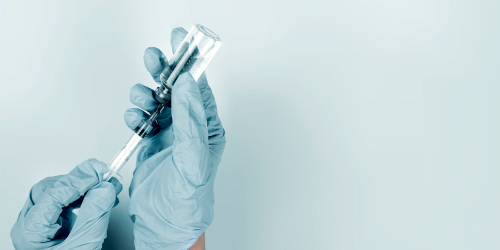

Both approaches have their merits, but which is best for your product?
In the highly regulated world of medical device manufacturing, precision and reliability are non-negotiable. Every component, every bond, and every seal must meet stringent standards to ensure patient safety and regulatory compliance. One of the most critical decisions manufacturers face is whether to adopt medical device assembly automation or stick with manual assembly processes.
This article explores the advantages and limitations of automated and manual assembly, factors influencing the choice, and how Europlaz helps clients navigate this decision.


Understanding medical device assembly
Medical device assembly involves combining multiple components – often produced through injection moulding, machining, or additive manufacturing – into a finished product ready for sterilization and packaging. From drug delivery systems and diagnostic kits to surgical instruments and implantable devices, the assembly process must guarantee consistency, sterility, and compliance with ISO 13485 and FDA regulations.
At Europlaz, we offer manual, semi-automated, and fully automated assembly solutions within ISO Class 7 cleanrooms, ensuring every product meets the highest standards of quality and traceability.
Manual assembly: flexibility and craftsmanship
Manual assembly has been the backbone of medical device manufacturing for decades. Skilled technicians use specialized tools to assemble components, apply adhesives, and perform quality checks.
Advantages of manual assembly
- Flexibility for low-volume production
Manual assembly is ideal for prototypes, pilot runs, and low-volume production where design changes are frequent. - Lower initial investment
No need for expensive robotics or automation equipment, making it cost-effective for start-ups or niche products. - Human oversight
Complex or delicate tasks that require judgment and adaptability can benefit from human involvement.
Limitations
- Inconsistent quality
Human error can lead to variability in product quality, especially in high-volume runs. - Higher labour costs
Manual assembly is labour-intensive, increasing operational costs over time. - Slower throughput
Production speed is limited by human capability, which can impact time-to-market.
Automated assembly: precision and scalability
Automation leverages robotics, vision systems, and AI-driven quality control to streamline assembly. Automated systems excel in repetitive, high-precision tasks such as ultrasonic welding, micro-dosing, and component placement.
Advantages of automation
- Unmatched consistency
Automation ensures repeatability, reducing defects and improving compliance. - High-speed production
Robotic systems can operate 24/7, dramatically increasing output. - Enhanced traceability
Integrated data systems record every step, supporting regulatory audits and quality assurance. - Reduced human error
Automation minimizes variability, which is critical for complex devices like catheters or diagnostic kits.
Challenges
- High initial investment
Automation requires significant capital for equipment and integration. - Limited flexibility
Design changes can necessitate costly reprogramming or tooling adjustments. - Technical expertise
Specialised knowledge is needed to maintain and optimize automated systems.

Hybrid approach: the best of both worlds
For many manufacturers, a semi-automated solution offers the ideal balance. By automating repetitive tasks – such as adhesive dispensing or packaging – while retaining manual oversight for complex steps, companies can improve efficiency without sacrificing flexibility.
Europlaz frequently implements hybrid systems for clients who need scalability but anticipate design iterations during early production phases.

Factors to consider when choosing your assembly method

Product complexity
Devices with intricate geometries or sensitive materials may require manual handling.

Volume requirements
High-volume production typically favours automation for cost efficiency.

Regulatory compliance
Automation can simplify documentation and validation processes.

Budget and ROI
Consider long-term savings versus upfront investment.

Time-to-market
Automation accelerates production, which can be critical for competitive launches.
Medical device assembly automation at Europlaz
Our ISO Class 7 cleanrooms and advanced assembly lines accommodate manual, semi-automatic, and fully automated processes. We integrate technologies such as:
- Ultrasonic and hot plate welding
- UV adhesive bonding
- Robotic component handling
- Vision systems for quality verification
Every solution is tailored to your product’s requirements, ensuring compliance, efficiency, and scalability.
FAQs: medical device assembly
Is automation always better than manual assembly?
Not necessarily. Automation is ideal for high-volume, standardised products, while manual assembly suits low-volume or highly customised devices.
How does automation impact regulatory compliance?
Automated systems improve traceability and consistency, making it easier to meet ISO 13485 and FDA requirements.
What is the cost difference between manual and automated assembly?
Manual assembly has lower upfront costs but higher long-term labour expenses. Automation requires significant initial investment but reduces per-unit costs over time.
Does automation eliminate human involvement?
No. Most automated systems still require skilled operators for oversight, maintenance, and quality assurance.
Automated vs manual medical device assembly
Ready to determine the best assembly method for your medical device? Contact Europlaz today to discuss your project with our expert team. Whether you need manual precision, automated scalability, or a hybrid solution, we’ll help you achieve compliance, efficiency, and market success.

Download our brochure
Curious to learn more? Download our brand-new company brochure to discover how Europlaz is evolving and what it means to you.
Discover Europlaz
Our UK-based ISO 13485 certified and FDA-compliant cacility means that we have complete control of the process, from under one roof. We are flexible, and resourceful, and can take on projects of any size. Our clients range from small start-ups to international blue chip medical device suppliers.