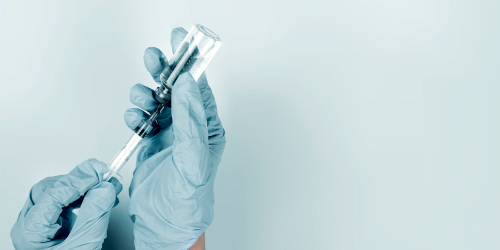

What is medical injection moulding?
At Europlaz, we integrate regulatory expertise, stringent quality controls, and state-of-the-art automation to meet the highest industry standards for medical injection moulding.
The medical injection moulding process
- Clamping
- Injection
- Cooling
- Ejection
Each phase is carefully controlled and documented to ensure product consistency, dimensional accuracy, and compliance with medical manufacturing standards.
The medical injection moulding process begins with the clamping phase, where the two halves of the mould are securely closed using a hydraulic or servo-driven clamping unit. It is critical that the mould remains tightly sealed under high pressure to prevent any material leakage or flashing during the next stage. Europlaz uses precision-engineered tooling and carefully calibrated machines to apply the correct clamping force for each specific mould.


Following injection, the part enters the cooling stage. The mould remains closed while the molten plastic solidifies into the desired shape. Cooling channels within the mould help regulate the temperature, allowing the component to set evenly and predictably. Accurate control over this phase ensures dimensional stability and minimises internal stress or warping in the final product.
Finally, during the ejection phase, the mould opens and the now-solid component is pushed out using precision ejector pins or plates. Depending on the complexity and material, additional processes such as degating, trimming, or visual inspection may follow. The mould then closes again to repeat the cycle for the next part.
Each stage of the Europlaz medical injection moulding process is supported by digital monitoring systems, SPC data collection, and inline inspection protocols. This meticulous approach is what enables us to consistently achieve the tight tolerances and repeatable quality expected in regulated medical manufacturing environments.


Advanced moulding capabilities: single shot, insert moulding and overmoulding
Injection moulding techniques such as Single Shot, Insert Moulding, and Overmoulding (2K) enable manufacturers to meet a wide range of technical, mechanical, and regulatory requirements — all while maintaining precision, repeatability, and compliance.
At Europlaz, we have experience in the following processes…
Single shot injection moulding
Medical-grade polymers like polypropylene, polycarbonate, and polyethylene are frequently moulded using this method to produce housings, connectors, fluid handling parts, and disposable components used in clinical and laboratory settings. It is especially well-suited for applications that do not require multiple materials or integrated features.
Insert moulding
Insert moulding is commonly used in medical devices that require embedded metal components such as threaded inserts, contact points, or structural reinforcements. It is also used to overmould blades or sensors into handles and housings, ensuring mechanical reliability and alignment without compromising on sterility or dimensional precision.
Overmoulding (2K moulding)
The first material is moulded and retained in place while the second material is moulded over or around it — forming a permanent bond.
Overmoulding enhances device usability, patient comfort, and functionality, and is widely used in products such as syringe plungers, wearable enclosures, inhalers, and control interfaces.
These medical injection moulding capabilities enable more sophisticated product designs, reduce assembly steps, and help ensure compliance with industry standards — all while streamlining the manufacturing process.
Key applications in healthcare
Medical-grade material list
Here is a representative list of materials we work with regularly in our medical injection moulding processes:

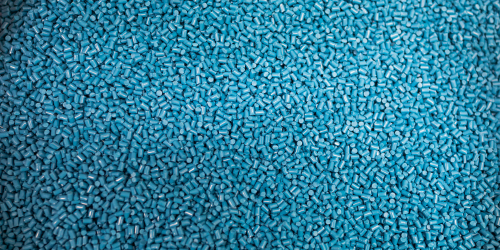
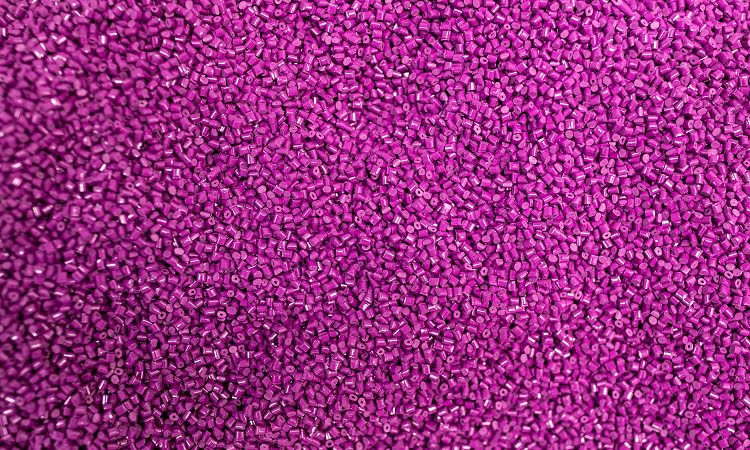
Polyethylene (PE)
Medical-grade PE — including both high-density (HDPE) and low-density (LDPE) variants — is valued for its toughness, processability, and compatibility with sterilisation methods like gamma irradiation and ETO. Its inert nature makes it an ideal material for contact with pharmaceuticals, biological samples, and other sensitive substances in diagnostic and therapeutic devices.
Polypropylene (PP)
Polyvinyl Chloride (PVC – Medical Grade)
Silicone
Its hypoallergenic properties and compliance with ISO 10993 and USP Class VI make silicone a preferred material for both short-term and long-term contact with the human body.
Additionally, liquid silicone rubber (LSR) can be injection moulded with precision, enabling the manufacture of complex geometries in cleanroom environments.
Polyetheretherketone (PEEK)
Thermoplastic Elastomers (TPE & TPU)
Medical grade materials and biocompatibility
Material choice is critical in medical injection moulding. Europlaz offers expert guidance on selecting biocompatible polymers for specific healthcare applications. All materials are sourced from certified suppliers and assessed for durability, sterilisation compatibility, and patient safety.
6 key factors in polymer selection
1. Biocompatibility
Biocompatibility is the foremost criterion in selecting polymers for medical devices. The material must not induce an immune response or cause toxicity when in contact with body tissues and fluids.
Polymers including polyethylene (PE), polypropylene (PP), and polyvinyl chloride (PVC) have been widely used due to their proven biocompatibility. Advanced materials such as thermoplastic polyurethanes (TPU) and polyether ether ketone (PEEK) offer high performance and biocompatibility for more demanding applications.
2. Mechanical properties
The mechanical properties of the polymer must align with the device’s functional requirements. Factors such as tensile strength, elasticity, flexibility, and durability are critical.
For example, polycarbonate (PC) is chosen for its high impact resistance and clarity, making it suitable for medical housings and transparent components, while silicones are preferred for their flexibility and resilience in catheters and implants.
3. Chemical resistance
Medical devices often come into contact with various chemicals, including disinfectants, medications and bodily fluids. The polymer must resist degradation and maintain its integrity when exposed to these substances.
Polymers such as fluoropolymers (e.g., PTFE) are renowned for their excellent chemical resistance, making them ideal for tubing and fluid transfer systems.
4. Sterilisation compatibility
Sterilisation is a critical step in ensuring the safety of medical devices. The chosen polymer must withstand common sterilisation methods such as autoclaving, gamma irradiation, and ethylene oxide treatment without compromising its properties.
For instance, polypropylene and polyetherimide (PEI) can endure high-temperature autoclaving, whereas certain grades of polycarbonate and TPU are better suited for gamma sterilisation.
5. Processing and manufacturing
The ease of processing and manufacturing can significantly influence the selection of polymers. Factors like moldability, extrusion capabilities, and compatibility with additive manufacturing technologies are considered.
For high-volume production, injection-mouldable polymers like polystyrene (PS) and acrylonitrile butadiene styrene (ABS) are favoured for their ease of processing and cost-effectiveness.
6. Regulatory compliance
Medical devices are subject to stringent regulatory requirements to ensure their safety and efficacy. The chosen polymer must comply with relevant standards and regulations, such as ISO 10993 for biocompatibility and FDA guidelines.
Manufacturers must conduct thorough testing and documentation to demonstrate compliance, which can influence material choice.

Quality assurance and regulatory compliance
Quality and compliance are central to Europlaz’s service. We integrate quality planning into every stage of development and manufacture, ensuring devices meet regulatory and performance benchmarks from start to finish.
ISO 13485 medical device standards
Europlaz operates under a certified ISO 13485 quality system. This ensures robust document control, supplier traceability, design verification, and ongoing process monitoring.
We also support ISO 14971-based risk management, and our CAPA procedures are fully auditable to global standards. Clients benefit from proactive quality oversight and detailed compliance documentation.
Cleanroom manufacturing environment
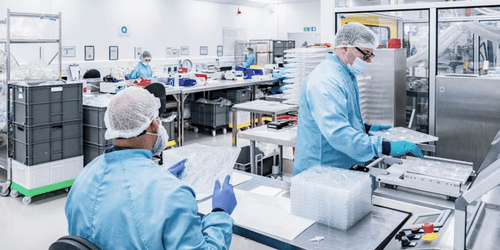
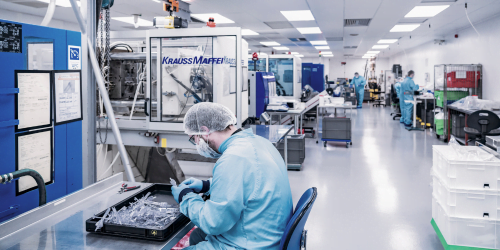
Our cleanrooms are built and maintained to ISO 14644 standards, operating at Class 7. These environments are validated through routine environmental monitoring, airflow analysis, and pressure balancing to protect product integrity throughout the entire moulding process.
Cleanroom injection moulding is essential for applications where cleanliness and sterility are non-negotiable — such as diagnostic components, inhalation drug delivery systems, surgical devices, and pharmaceutical packaging. In these sectors, contamination from particulates or human handling can jeopardise safety, lead to product recalls, or cause regulatory delays.
By moulding components directly within a cleanroom environment, Europlaz eliminates downstream cleaning requirements and builds assurance into the process from the outset.
We use validated materials that are compatible with cleanroom processing and sterilisation techniques, including gamma irradiation, ETO, and autoclave sterilisation. Our operators are trained to stringent gowning and hygiene protocols, and our quality system enforces batch segregation, material traceability, and full documentation at every step.
Clients who partner with Europlaz gain access to GMP-aligned, ISO 13485-certified cleanroom moulding workflows, backed by decades of experience in delivering sterile-ready medical products. Whether you need short runs of a prototype component or sustained high-volume production, we offer the flexibility, regulatory support, and technical confidence to deliver cleanroom moulded parts that meet or exceed your expectations — every time.
Validation and documentation
All processes are validated and documented with batch records, material certificates, and complete traceability reports. This approach helps clients achieve MDR, CE mark, FDA, or MHRA compliance with confidence.
Advantages of medical injection moulding
Precision and repeatability
Medical devices require extremely tight dimensional control. Our equipment and quality systems allow us to mould parts with tolerances as fine as ±0.002 inches. In-line inspection, CMM validation, and SPC methodologies ensure every part meets specification — whether it’s the first or the millionth in a production run.
Cost-effective high-volume production
Medical injection moulding is ideal for high-volume production due to its repeatability and low per-unit cost. Once a validated mould is in place, parts can be produced with exceptional efficiency and minimal waste. Our automated production lines and lean workflows reduce cycle times and increase output, providing economic benefits for large-scale medical programmes.
Complex geometry capabilities
We specialise in components with complex geometries, such as thin-walled housings, intricate internal features, and parts with undercuts or threads. We also offer multi-material and overmoulding solutions that eliminate the need for secondary assembly. This enables more compact device designs, improved performance, and reduced handling.


Medical device applications
Medical injection moulding is a foundational technology in its sector, offering design freedom, material versatility, and scalability. At Europlaz, our moulded components support a wide array of critical functions across therapeutic, monitoring, support and consumer-facing medical devices.
Implantable devices
Medical injection moulding plays a critical role in the production of implantable devices, including joint replacements such as hip and knee implants, as well as dental implants and bone fixation systems. These components must exhibit exceptional strength, dimensional stability, and biocompatibility to function safely within the human body.
High-performance materials such as PEEK and medical-grade silicone are commonly used due to their resistance to bodily fluids, durability under stress, and compliance with long-term implantation standards like ISO 10993.
Surgical tools
Precision, strength, and sterility are essential for surgical instrumentation, and medical injection moulding provides the consistency and scalability required for high-quality manufacturing.
A wide range of moulded surgical tools can be produced, including scalpel handles, retractors, forceps and clamps, using materials chosen for their mechanical strength, thermal stability, and resistance to repeated sterilisation. These tools must withstand autoclaving and maintain dimensional integrity throughout repeated use.
Consumable and disposable medical products
Medical injection moulding is ideally suited for producing high-volume, single-use medical products that demand sterility, affordability, and repeatable quality. Examples include syringes, test tubes, Petri dishes, and IV drip chambers, which are commonly used in clinical, diagnostic, and laboratory settings.
These components are often manufactured from materials like polypropylene, polystyrene, or polyethylene, and are produced under cleanroom conditions to minimise contamination risks.
Laboratory equipment
Injection moulded parts are widely used in laboratory environments, where accuracy, cleanliness, and compatibility with automation are essential. Typical applications include specimen containers, pipette trays, instrument handles, and multiwell microplates. Materials must be chemically inert and dimensionally stable, with high clarity or surface precision where optical or mechanical compatibility is required.
Medical device housings and enclosures
Many medical and diagnostic devices require durable enclosures to protect internal electronics and maintain sterility. Medical injection moulding is used to manufacture housings for products such as patient monitors, infusion systems, and testing instruments.
These enclosures must meet standards for impact resistance, flame retardance, and electromagnetic shielding, and are typically moulded from polymers such as polycarbonate, ABS or TPU.
Sterile packaging solutions
Medical injection moulding also supports the production of sterile medical packaging, which safeguards medical devices during storage, transport, and application. This includes items such as vial caps, blister tray components, and custom containers, all designed to maintain barrier protection and withstand sterilisation methods including gamma irradiation, ETO, or autoclaving. Materials are selected for their chemical resistance, clarity, and compliance with packaging regulations for medical use.
Why choose Europlaz for medical injection moulding?
As a proud UK-based medical device manufacturer, Europlaz is strategically positioned to serve the growing demand for high-quality, localised, and regulation-ready medical injection moulding services within the British healthcare sector and beyond.
Operating from our state-of-the-art facility in Essex, we support companies across the UK and the world who are looking to shorten supply chains, mitigate offshore risk, and partner with a team that understands the full regulatory landscape — from MHRA and CE marking to international standards like ISO 13485 and FDA compliance.
Our clients benefit from faster response times, reduced shipping complexity, and easier collaboration throughout the development, validation, and scale-up phases. Whether you’re an NHS supplier, a British start-up launching a new device, or an established OEM looking to repatriate production, Europlaz offers a robust, responsive manufacturing partnership rooted in technical competence and regulatory credibility.
We understand the pressures facing UK-based medtech developers — from Brexit-driven compliance hurdles to sustainability goals and domestic tender requirements. That’s why our services are structured to meet local expectations, with traceable UK production, and cleanroom capabilities that meet the highest clinical standards.
In addition to our technical capabilities, Europlaz provides a vertically integrated offering from a single British site. This includes in-house toolroom, injection moulding, assembly, cleanroom packaging, and post-moulding operations – all managed under one quality system and one accountable UK-based partner.
With a longstanding history of serving the UK healthcare sector — including partnerships with NHS suppliers and British pharmaceutical manufacturers — Europlaz combines global-standard capabilities with the speed, agility, and assurance of a trusted domestic partner.
FAQs
What is medical injection moulding?
Medical injection moulding is a manufacturing process where molten medical-grade plastic is injected into a precisely engineered mould to produce high-quality, consistent components for healthcare and pharmaceutical applications.
What types of medical devices can be made using injection moulding?
The process can produce a wide range of products including surgical tools, implantable components, diagnostic equipment, housings and enclosures, sterile packaging, and high-volume disposable items such as syringes or test tubes.
Which materials are suitable for medical injection moulding?
We work with a variety of FDA-approved and ISO 10993-compliant materials including polyethylene (PE), polypropylene (PP), medical-grade PVC, silicone, PEEK, TPE, and TPU. Each material is chosen for its biocompatibility, durability, and sterilisation compatibility.
Do you manufacture in cleanroom conditions?
Yes. All our medical injection moulding operations take place in ISO 14644 Class 7 cleanrooms, ensuring strict particulate and microbial control for products requiring high levels of sterility.
Can Europlaz support regulatory compliance?
Absolutely. We operate under ISO 13485 certification, follow ISO 14971 risk management, and can provide full documentation to support MDR, CE mark, FDA, and MHRA compliance.
What is the difference between single shot, insert moulding, and overmoulding?
Single shot uses one material in one process; insert moulding embeds a pre-formed component within the moulded part; overmoulding combines two materials or colours in a single component for added functionality, comfort, or performance.
Can you handle both prototype and high-volume production?
Yes. We offer short-run prototyping through to full-scale production, all from our UK facility, with scalable processes to meet project demands.